

Pilot cohort · Norwalk, CA
Build real software with AI tools. In a room, with people, in Norwalk.
The Agentic Engineering Immersive is an eight-week, in-person cohort of 8–12 students. Two evenings a week. You leave with a full-stack project you designed, built and deployed yourself.
Winter 2026–27 · Evenings, 2 nights a week · 8 weeks · 8–12 students
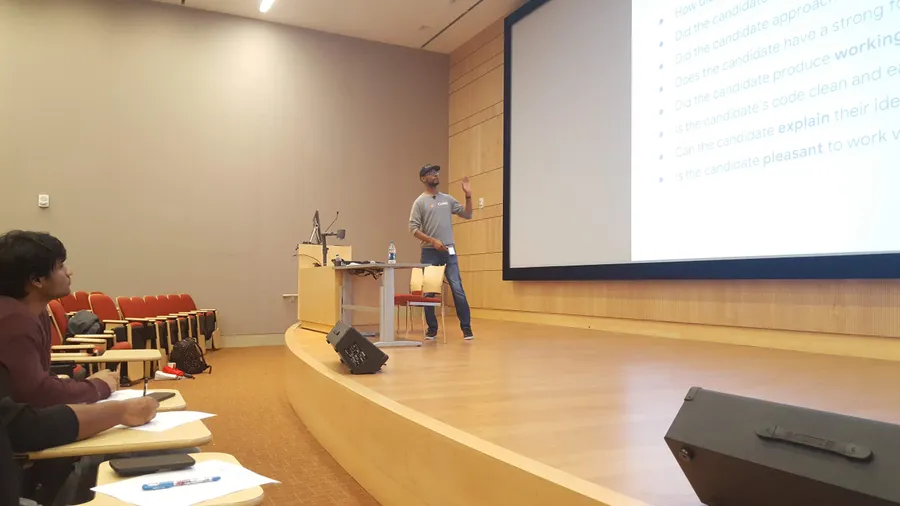
Taught by Anthony D. Mays — 24+ years building software, including years as a Google software engineer and technical interviewer.
The honest promise
You have probably been pitched by a program that promised more than it delivered. So here is the whole thing in plain terms, including the parts that don't help us sell it.
What you will be able to do
- Direct AI coding agents to build, test and debug working software — and know when the agent is wrong.
- Take a project from an idea to something deployed on the internet that other people can use.
- Show your work: a live project, the repository behind it, and the ability to explain every decision in it.
- Carry a skill that pays across fields. Lightcast puts the wage premium on AI skills at about 28%, and more than half of the demand for them sits outside IT departments.
What we will not tell you
That you'll get a job.
We don't promise one, and we don't have a hiring pipeline. Entry-level hiring in tech is down roughly 65% from 2019, and what recovery there is has favored senior engineers.
Placement or salary numbers.
We are a pilot. We have no graduates yet, so we have no statistics, so we're not going to show you any.
That eight weeks makes you a senior engineer.
It doesn't. It makes you someone who can build and ship, which is a real and specific thing.
If a program tells you otherwise, ask them for the number and the source. That's a fair question to ask us too.
What you'll build
Every student designs and builds a full-stack application, working with AI coding agents the way a working engineer does. Imagine a fully working e-commerce system with a catalog, a cart, a checkout flow, an admin view — deployed and running.
Every capstone meets the same bar
- Deployed and publicly reachable on the internet
- The repository behind it, open for anyone to read
- You can explain every decision in it
Real student projects will appear here after the first cohort. We're a pilot, so there aren't any yet.
What gets taught along the way
The harness
Configuring agentic harnesses
Setting up the environment an agent works inside: what it can read, what it can run, what context it gets, and how you give it a task it can actually finish.
Guardrails
Guardrails and review
Where to put the limits — permissions, tests, checks that run before anything merges — so an agent moving fast can't quietly break things.
Models
Assessing models
Comparing models on your own work instead of on benchmarks: where each one is strong, where it fails, what it costs, and when a smaller one is the right call.
Workflow
Establishing a workflow
Building the loop you'll repeat all eight weeks: how work gets broken down, handed to an agent, reviewed, corrected and committed.
UX
Working with UX
Designing what the thing actually does before generating it. Flows, screens, states and the fundamentals of why an interface reads clearly or doesn't.
Deployment
Deployment and operation
Getting it onto the internet and keeping it there: environments, configuration, and knowing what broke when something breaks.
Underneath all of it, software engineering and UX fundamentals. Agents make bad decisions faster than people do, so the point of the eight weeks is judgment: the ability to read what came back, know whether it holds, and say why.
Who this is for
This program exists for Southeast LA County. We're running it here because these are our neighbors, and because a room you can drive to is worth more than a video call from anywhere.
Who can apply
The Immersive is open to adults 18 and over. Seats are limited, so when we choose the pilot cohort we give priority to:
- Residents of the eight Southeast LA County cities
- People for whom cost is the thing standing in the way
- Young adults aged 18 to 24
Southeast LA County means Artesia, Bellflower, Cerritos, Downey, Hawaiian Gardens, Lakewood, Norwalk and Paramount. If you're not sure whether this is you, join the waitlist anyway and ask us.
You'll get the most out of this if
You can already write code.
If you've written and run your own programs before, in any language, you're ready. A class, a bootcamp, or teaching yourself all count. This isn't an introduction to programming, and you'll struggle if it's your first week.
You can get to Norwalk twice a week for eight weeks, in the evening.
Attendance is most of what makes a small cohort work.
You want to build things, not collect a certificate.
The work is the point, and there's a lot of it in eight weeks.
Format, dates and cost
In person in Norwalk, two evenings a week for eight weeks, with 8 to 12 students in the room. Bring a laptop; we cover the AI tooling.
Tuition is paid upfront or by a funder. There's no financing, no deferred tuition and no income-share agreement — you'll never owe us a share of a future paycheck.
We're working to secure funded seats for students who can't cover tuition. That funding isn't in place yet. When it is, it'll be named here with who is paying for it. Join the waitlist and we'll tell you either way.
Pilot cohort tuition
$1,500 total
That's the whole cost. No materials fees, no equipment charges, nothing added later.
- Instruction, 8 weeksIncluded
- AI coding tool accessIncluded
- Hosting for your projectIncluded
- Seat in the Norwalk roomIncluded
Pilot pricing, held for the first cohort.
Starting Winter 2026–27 — exact dates and the Norwalk address go to the waitlist first.
Who's teaching
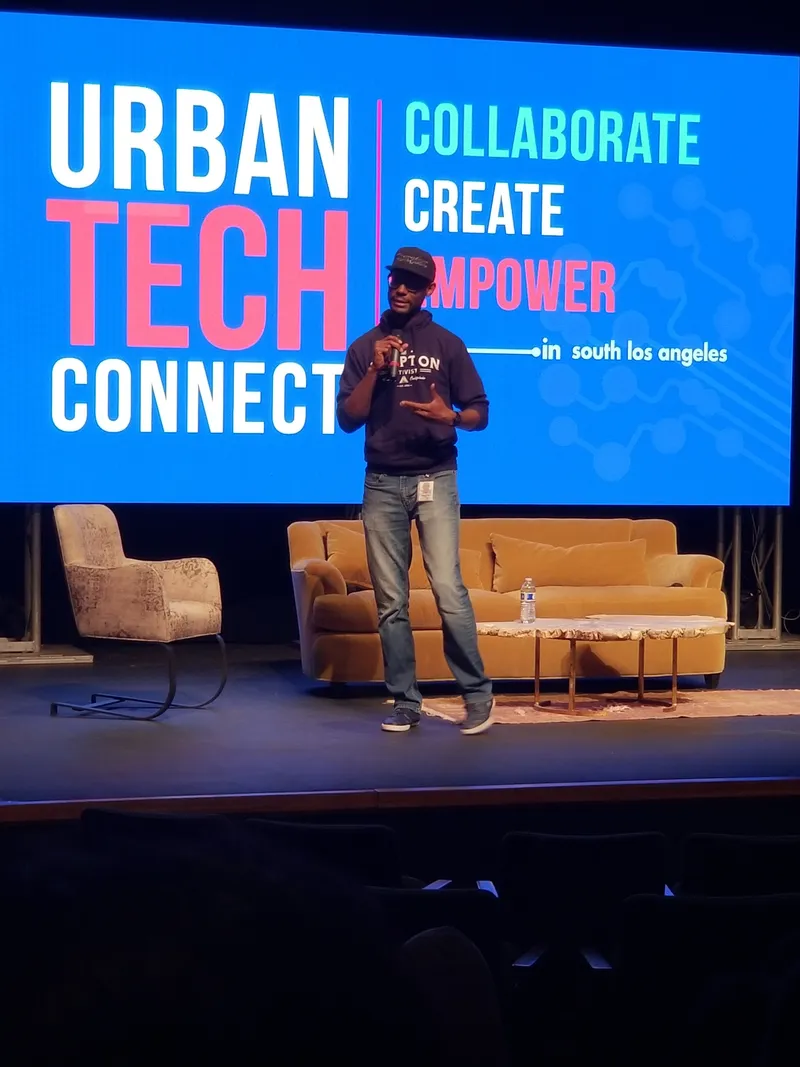
Anthony D. Mays has spent 24+ years building software at scale, including years at Google as a software engineer and a technical interviewer. He evaluated the candidates, so he knows what companies actually screen for — and what they don't.
Morgan Latimer Consulting has built and taught technical curriculum for Intuit, AWS, Microsoft and The Colorwave, and Anthony has trained engineers at FAANG and Fortune 500 companies. The same practice that companies pay for is what's being taught in Norwalk.
Grantee of Google's Tech Equity Collective Impact Fund.
Read the case studiesQuestions people ask
Do I need to know how to code already?
Yes. You should be able to write and read code before you start — self-taught counts. If you've written and run your own programs before, in any language, you're in the right place. This program is about building real software with AI agents, which assumes you can tell when the code is wrong.
Is this a job guarantee?
No. We don't guarantee jobs, place graduates, or run a hiring pipeline. We teach you to build, and you leave with a project that proves you can.
What if I can't afford it?
Tell us on the waitlist form. We're working to secure funded seats and we'd rather know who needs one before that funding is finalized. We don't offer financing or income-share agreements.
Why in person, when everything else is online?
Because getting unstuck takes ten seconds next to someone and a week alone. Eight to twelve people in a room is the whole design.
What's “agentic engineering”?
Building software by directing AI coding agents — deciding what to build, giving the agent the right work, reviewing what comes back, and owning the result. It's a working practice, not a tool demo.
When exactly does it start?
Winter 2026–27. We're holding the exact dates until the pilot cohort is set, and the waitlist hears first.
Join the pilot cohort waitlist
The first cohort is 8 to 12 people. Waitlist members hear the start date, the application, and any funded-seat news before anyone else. It's not a commitment and it costs nothing.
Questions before you sign up? Emailcontact@morganlatimer.com and Anthony will answer.
For workforce boards, nonprofits and employers
We're looking for partners to fund seats for Southeast LA County residents, and we run this training for organizations directly. Curriculum, outcomes reporting and cost structure available on request.
Talk to us about partnering